Sunday, April 24, 2011

Summer..


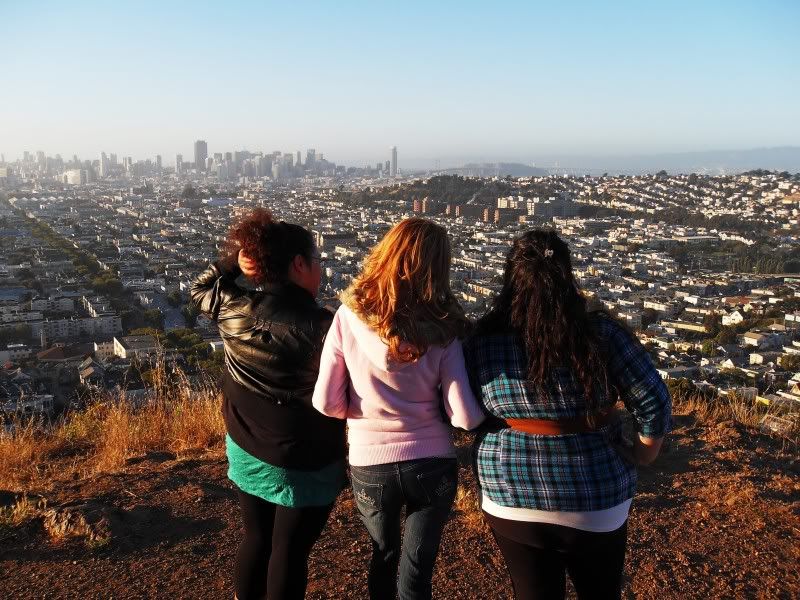
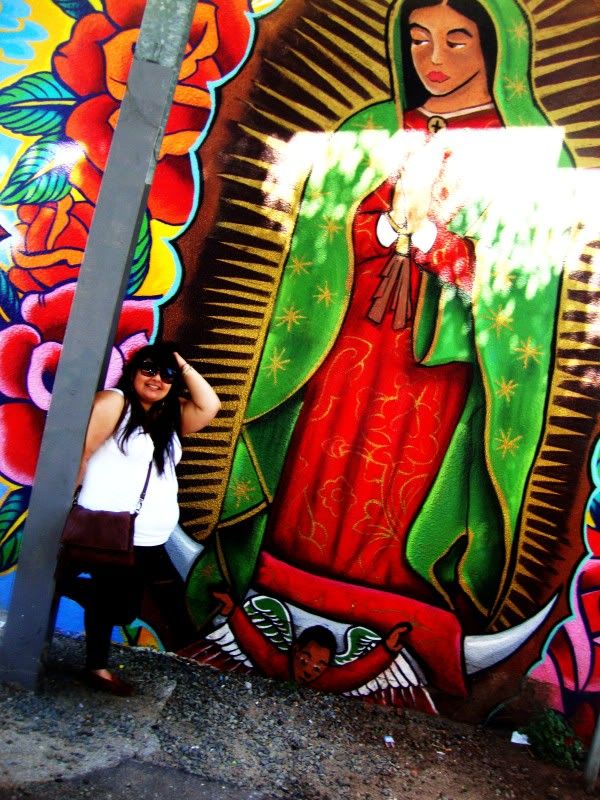
So one thing that just hit me today was that...THIS WEEK IS THE LAST WEEK OF CLASSES! I'm honestly so excited for summer. Although summer school and getting a job are in the mix of my to do list, I cant wait for all the new experiences to come, memories to last, and overall adventures to begin! Words can not express how thrilled I am about being home for roughly 3 months..especially since home for me is San Francisco! I cant wait to take in that sea breeze and be out and about with my friends. I'm excited about absolutely everything, whether it be laying under a palm tree at Dolores park or taking a walk and admiring the grafiti art and murals of my neighborhood which is the Mission District. Although im going to miss all my friends here at NDNU nothing beats going home to San Francisco<3
AHHHHH I CANT WAIT =D


Chapter 23: Peace in the South (Nelson Mandela video)

Really Intresting little video on Nelson Mandela..ENJOY :)

Chapter 23: Peace in the South (Nelson Mandela)

Nelson Mandela is one of South Africa's main heroes. After spending 27 years of his life in jail for counts of high treason and conspiracy, he is nothing more then a leader in the peace movement. He fought for South African Black rights all while keeping the peace. He wanted justice in the South AFrican System which favored white South Africans. Being Black, he face alot of hardships and was very difficult for him to make it to the top. Nonetheless he was South Africa's first president who was elected democratically and won in 1994.Nelson Mandela was an activist against apartheid, and he was the leader of the armed wing of the African National Congress. He suffered enormous challenges and still managed to achieve them. And won the nobel prize for peace in 1993. Mandela studied law and  has honorary degrees from more than 50 international universities. It just goes to show you that anything is possible.

Chapter 22: Communism ( Karl Marx)

One can argue that the idea of communism has been taking place since the Nineteenth century. Who may you say started this movement? None other then Karl Marx. According to Marx, the finals step of being less ignorant was communism.  Communism is "a theory or system of social organization based on the holding of all property in common, actual ownership being ascribed to the community as a whole or to the state." To make things simple it is the belief that everyone is equal and everyone has the same things which the government passes out and protects..basically all forms of property belong to the government. Not only was communism in Europe but it was spreading all over Eastern Europe, North Korea, Vietnam, Laos, Cambodia, Cuba, and Afghanistan. Basically what this system did was redistribute wealth and shut down the idea of social classes. Marx believed "man was cut off from ways of living" with ought communism. In 1847 Marx made the communist league which was an article based on how the working class was being taken advantage of, which set off the people. The articles addressed in communism were, the abolition of private property, no inheritance, steady of income tax, unification of people's money, and the expansion of factories, and equal responsibilities for all, as well as free education for children. Marx believed if these ideas happened, then the social class system would disappear. In October of 1917, a huge rebellion was formed against Russia's provisional government in which the lower class/ working class won. Which opened a whole new door for Russia.

Chapter 21:World Wars I and II ( emphasis on Germany)

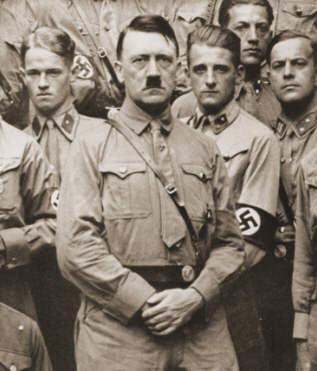
In 1936 the world was changing politically, and what rose was communism. Most countries were against the idea but those that were for it decided to form an alliance also known as the axis powers, which included,  Italy, Germany, and Japan. With communism sweeping through, a fascist government system was as well. Fascism is "a governmental system led by a dictator having complete power, forcibly suppressing opposition and criticism, regimenting all industry, commerce, etc., and emphasizing an aggressive nationalism and often racism." At the time of all this, people were looking for the easy way out in seeing their governments and overall nations succeed. Communist leaders would brain wash the people as well as tell them lies about how great this system would be. In Italy for example the fascist leader Mussolini, fell in to this category. With Mussolini in control, Italy created a “corporate state” economy and viewed women as second class citizens. As the book referred, women were viewed as :easy access baby making factories. But Mussolini was no match for ADOLF HITLER. After the cold war in  Germany and WWI, Germany was ready for a big change. People made the people believe he was all they were hoping for in a leader. He made captivating speeches and brain washed the people of how good his ideas were. In my opinion Hitler was nothing more then a RACIST. He had a huge burning hatred for the Jewish people of Germany. He believed that the perfect human being was the Aryan race; blonde haired blue eyed people. Nonetheless Hitler had his wired crossed on his beliefs. He is well known for making a sweep through of killing most Jews in Europe. Hitler was not alone, he acted fast with the help of his army.. the Nazis. Millions of people suffered from the Holocaust or the slaughter of Jews in Germany. According to Hitler this is what God wanted and the people could only live in fear of what his plans were next.

Chapter 19: Japan, China & The Ottoman Empire (emphasis on CHINA)

During 2000, the people of Asia, specifically Japan and China, were afraid of Europe taking over their countries. The people of Japan and China saw how Europeans and their dominance was spreading globally. They were afraid of European ideas coming to Asia and their influence spreading all over Asia's strong traditional values. Nonetheless Japan and China were afraid of their culture s and traditions disappearing because of European influence. Nonetheless the whole globe had to deal with European imperialism, as well as the problems going on within their countries. In 1793 China broke down and couldn't take it anymore. Chinese emperor Qianlong decided that it would be best for China to slow down trade with Europe. This made Europeans question their relationship with China thus making Europe upset. By 1912 this approach failed and thus China's exports became dominated by Europe. Not only was China's export in trouble but so was the country in general. China's population tripled in size and the country's agricultural was not enough to feed everyone. The gap between the rich and the poor also expanded in size because of this. China suffered many years until leader Hong Xiuquan (1814–1864) stepped in. He claimed he was from the gods and said he could restore China. Although he stopped one of the rebellions, his mission to save China failed.  Next came the Qin dynasty which most people had faith in , to their surprise their government system was weak as well. Nonetheless China was confused and was in a state of terror,and questioned what to do next.

Chapter 18: The Indistrial Revolution

Although I've already blogged about the Industrial Revolution in Chapter 18, I found this really short video that pretty much sums up the key points..

Saturday, April 23, 2011

Chapter 17: A Time of Revolutions

During this time frame in world history, the people of North America, Europe, Haiti, and Latin America were all looking for changes in their lifestyles and governments. People were tired of the ways of their governments, religious authority and monarchies. Although in different parts of the world, these countries all wanted the same thing..CHANGE. They shared  common goals and ideas which lead to the end of their European influence/ways of the past. Traditional thinking was done and over with at the time. People had new ideas about how to run things and sought to express those ideas. The core idea/principle of this point in history was popular sovereignty, which is the idea that "the authority to govern/ run something came from the people not god or tradition." This idea of popular sovereignty spread like wild fire all over Europe and pretty soon all over the world. 1775 the North American Revolution began. This was the fighting of Americans to gain their land from the British. It was a hard and long battle but soon after the colonies of this land had succeeded in taking the land from the British and therefore wrote the US Constitution. Soon after, the French also wanted change. After fighting alongside the American Colonies, the French returned home to fight yet another battle. When King Louis XVI decided to raise taxes all hell broke loose. The people were tired of their dictatorial monarchy and thus began building an army against the King and Queen of France. It was a huge deal, the French ended hereditary rule, executed the King and Queen and even abolished slavery. Because of these drastic actions, what awaited France was HUGE.  The government decided to kill off anyone who was a tential threat of disturbing the peace so they did a major sweep through of everyone involved in the revolution which were thousands. Because of this France split in to 83 colonies which were later united. Haiti then broke out against their French based government as well, the interesting part of  this battle  was that the people fighting were all slaves.After their success came the Latin Revolution against Spain which also succeeded.

Chapter 15: The Early Atlantic Trade ( Europe & Asia)

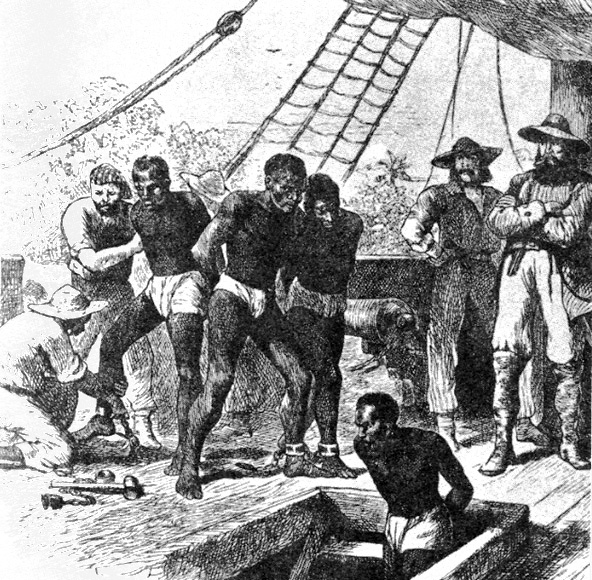
The Atlantic slave trade was one of the biggest events that ever hit globally. Between 1450 and 1750 the world, ocean, and nonetheless TRADING was changing. During this period was also the time Europe was expanding and inventing new thngs. People were exploring new things, seeing new places and nonetheless stepping out of the box of everyday lifestyles. In addition to Europe expanding globally, they were also exporting globally. Europe was in its prime and discovering that they could benefit and make a profit from goods but aswell as people. Europe had come up with a perfect plan. They saw that the other world leader was Asia and so they quickly wanted to establish a connection with them.They saw how Asia had silk, different types of animals and naturaul goods. As soon as they came up with this idea Columbus and Vasco da Gama both went to establish a route from Europe to Asia.The main thing on Europe's mind was... SPICES. Once Europe had established this, it created many ports globally which expanded to little trade centers which converted into cities. By this point in time the Indian ocean commerce was popular and full of diversity. People had established rules for trading and people could trade goods for foreign objects. The Portuguese saw this and wanted to gain control of the trading. The didnt want to take over the land, or sea..they wanted to control the commerce. The portugues did this by being united with Asia by exporting and importing Asian goods. Therefore creating an aliance. When Spain heard about this, they quickly acted fast to gain control over Portugal's control of Asian trade. When Magellan sailed the oceans he came across an island called the Phillipines, where Spain first built a port. As time went on, people started trading not only goods but people as well. Wealthy slave traders would come to Africa and take the people and sell them for labor. This was the start of  HUMAN SLAVE TRADE.

Boudreau’s article:Sex Trade

   At the beginning of the year, we read an article by Boudreau in regards to the sex trade in Vietnam. It told the story of how innocent girls are lured daily by sex traders from cities to work for the industry. The sad part of the situation is that these girls have no idea what they are getting into. The poverty in rural Vietnam is very high. These girls are simply looking for a way to make money to support their families. Vietnam has always had traditional ways of thinking and therefore most families aren't always thrilled when they are blessed with baby girls. The reason for this is that they believe that since men are "stronger" they are able to work more and therefore provide more income for the family. The parents of these girls now a days have the same mentality. They believe that their daughters must go out and find a way to help out their families in whatever way they can. With sex traders knowing this, they come to cities and do a major sweep through of young pretty girls. They tell these young ladies that they will bring them to the city to work for little businesses and provide food and shelter for them. Girls find this as the perfect way to help support their families and get excited to see the "CITY LIFE". What they don't know is that they are being trapped and being led to have sex with different men and are being contracted by these sex traders to sell their bodies for money with ought even getting paid. By the time these girls realize what is going on it's too late. The article describes how once taken by these sex traders its very unlikely that these girls will ever be found/located. If the girl is a virgin, men will pay double because apparently having sex with a virgin can "magically" cure illnesses such as aids which is completely ridiculous. It's sad to see these young girls taken at a young age and destroy their lives. These girls work under horrible conditions and are completely brain washed by the sex traders. an example of this is Truong, a young woman victimized of the sex trade. She quotes, “ If it had happened, it would have been because it was my destiny. That’s the life” (Truong).  It's truly sad to see the mindset of these girls, and extremely sad to see the victimization of the sex trade.

soo..

So since ALEXANDRIA PEREZ is a big fat procrastinator. She will recap on previous history topics studied in class. ENJOY :)

Wednesday, March 23, 2011

Colonialism (ch.20)

Colonialism can be described as "the control or governing influence of a nation over a dependent country, territory, or people in general." Better yet it was known as a community in one certain territory or region.  Colonies were comprised of families, workers,and pretty much people with a common goal. An example of a goal of a colony would be to explicit it's resources. In a colony one is expected to go by a system and basically remain loyal to the governing system and people. If one wanted to leave the colony one could do so in some of them. On the other hand other colonies required you to be apart of it forever, or you could go back and forth. At this point in history Europe was expanding and expanding. Europe had expanded and created colonies in Africa, Asia and the Americas. European takeover was often traumatic for the colonized peoples, the Europeans had distroyed their way of living and it was basically too overwelming for them because their system had changed completely. Most of the time people would cooaperate with the system of the Europeans out of fear . On other occasions the people would rebel against them which would lead to them being killed. With the colonization of these nations, the people starting interacting and mixing with the Europeans. According to the Europeans the women were in great danger because of this. They wanted to not mix with them and wanted their culture to be bold because they thought they were the best. Europeans thought that if you bend over and speak the native's language and abide by their culture you would show them respect which brings friendship which is what they didnt want. Along with that came the European's theory of "The White Man's Burden". Which is the idea that whites should educate non whites about being white, which is exactly what the europeans did to the colonies. The natives were confused and slowly losing their culture. Anything that had to do with their culture was prohibitted and so it died off slowly. All they had left was the European system which would crumble on them if the Europeans ever left.

Wednesday, March 16, 2011

Europe Durring the Industrial Revolution (Ch.18)

Durring the nineteenth century Japan and China were facing the threat of European dominance. Durring this time, European culture, ideas, art and Europe as a whole nation in general was spreading everywhere. They were in expanding in land, and therefore conquering many small nations. This made Latin America, Asia, The Middle East and and the whole globe very worried. They worried for their independence since thier global expansion was reaching it's peak. Because of this, Europe became "the center of the world's economy". One of the leading indicators why Europe was doing so well was the time frame it boosted in, which was the industrial revolution. People in Europe had the need to sell products, for example raw material, and fresh produce. The industrial revolution brought Europe many benefits and new technologies. Sunce Europe was the center of trade and new ideas sprouting, it was easier for them to expand with the help of these mechanisms. Some inventions that helped Europe expand were steamships, underwater telegraphs, quinine, rifles, and machine guns. Along with all of Europe's fame & success thier "heads started to grow" because of it. Europeans started thinking of themselves as better then any other race in the world. They started comming up with different ideas and theories to why they were the best type of race out there, which started to set up a heirarchy of races. Atthe bottom they placed Africans and worked their way up from skin tone. In their eyes, skin type mattered. Because of this, Europeans believed in the theory of " Social Darwinism"  the idea that "it is inevitable that the “unfit” races are to be displaced or destroyed". This created drama with all the other nations & nonetheless started controversies.
Wednesday, February 2, 2011

Science, Religion and an angry Martin Luther (Chapter 16)

 The early modern period was a time of cultural transformation. At this point in history many things started changing and the world was starting to invent new ideas and customs. Chapter 16 starts off with the questioning/rising of Christianity and all the different aspects associated with it. At the time, Christianity had no gone world wide instead of only limiting itself to a certain part of the globe. With the rising of Christianity, the science revolution also came to existence. People were using new technology and finding out different notations and principles based off of science. As human beings we tend to believe something based on if there is facts and evidence to prove it. As more and more people were discovering ideas based on facts the more people started straying away from a religion and were starting to believe in science. The science revolution was starting to be a new religion for some people. These changes in the world also sparked the new religions coming to be, and people questioning Christianity.


In 1517, a man by the name of Martin Luther, began the protestant reformation. Martin Luther questioned the ruling of the Catholic church as well as question the whole religion in general, with that he created "Ninety-five Theses". The Catholic church didn't approve of him and hated all the attention he was bringing toward them. Many people followed Luther which angered the Catholic church. As a result of the Protestants vs. Catholics came the 30 year war. The war spread through out all of Europe and caused the Catholics to go through a reformation. At the time however, the Portuguese and the Spaniard were conquering more territory and turning the conquested people to Catholicism which worked for the Catholic church's favor. Not only were the Spanish and Portuguese exploring, but Europe in general was expanding with the idea of science and technology. One can prove that the science revolution starting in Europe made sense due to the fact that Europe was exploding with new ideas and changes during the sixteenth–eighteenth century. With this came the ideas of Sir Isaac Newton, Galileo Galilei, and many others. Nonetheless Europe was in it's Golden Point.